
8.0
热点
AI SCORE
技术实践2026-08-22 15:30
Netflix 用自研语言模型 GenRec 替代传统推荐引擎
The Decoder#推荐系统#LLM#Netflix
Editor brief · 编辑速览
Netflix 将多年积累的推荐系统与内部语言模型 GenRec 对比,后者用纯文本描述观看行为,绕过数千个手工特征,效果更优。
Netflix built GenRec, a language-model-based recommendation system that outperforms its existing methods while needing far less training data.
The system converts user behavior into plain text instead of relying on elaborate hand-crafted features. A fine-tuned open-weight model analyzes that history and scores all matching titles in a single pass.
Both offline tests and a live A/B experiment with real users showed measurable improvements in recommendation quality. Netflix sees this as part of a broader shift toward general-purpose language models and away from custom-built architectures.
Netflix pitted its years-old recommendation engine against a language model and says it got better results. The system, called GenRec, needed a fraction of the labeled training data the old system required.
Netflix 的现有推荐系统依赖数千个手工设计的用户、标题和交互特征,据 Netflix 技术团队的博文所述。这种复杂性使得接入游戏、直播或播客等新内容类型成本高昂,也难以扩展到 Netflix 界面的新区域。但现成的语言模型同样不能直接用于推荐。它们过度偏好热门内容,会产生目录中不存在的标题幻觉,并忽略业务规则。
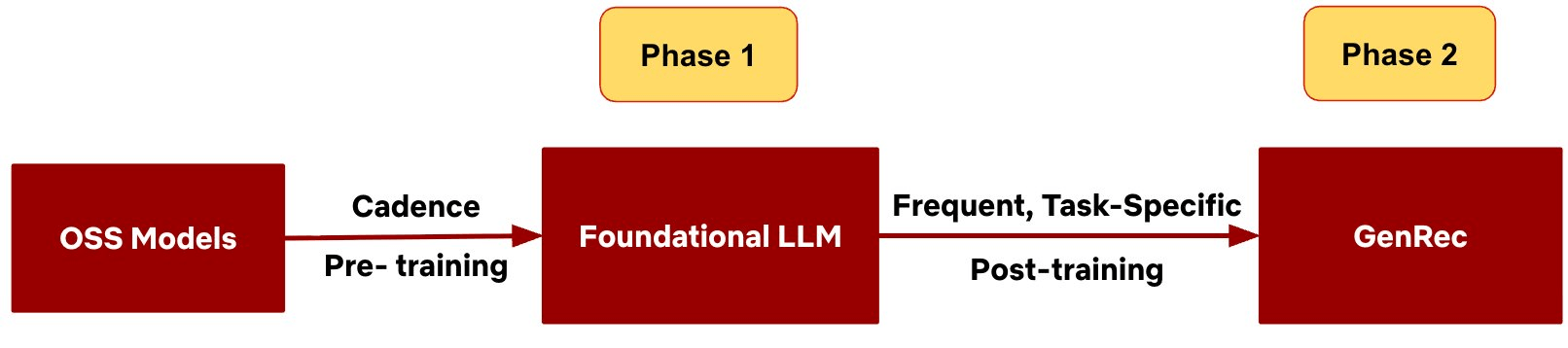
GenRec 正是为填补这一空白而设计。Netflix 以两个阶段训练其专有模型。首先,一个未公开名称的开源语言模型在 Netflix 数据上进行微调,以理解内容目录和用户行为。然后第二轮专门训练将这个基础模型转化为推荐排序器。第二阶段更新更频繁,以适应新标题和变化的用户偏好。
GenRec 将观看历史和上下文转换为自然语言,而不是将它们建模为手工设计的特征。| 图片来源:Netflix
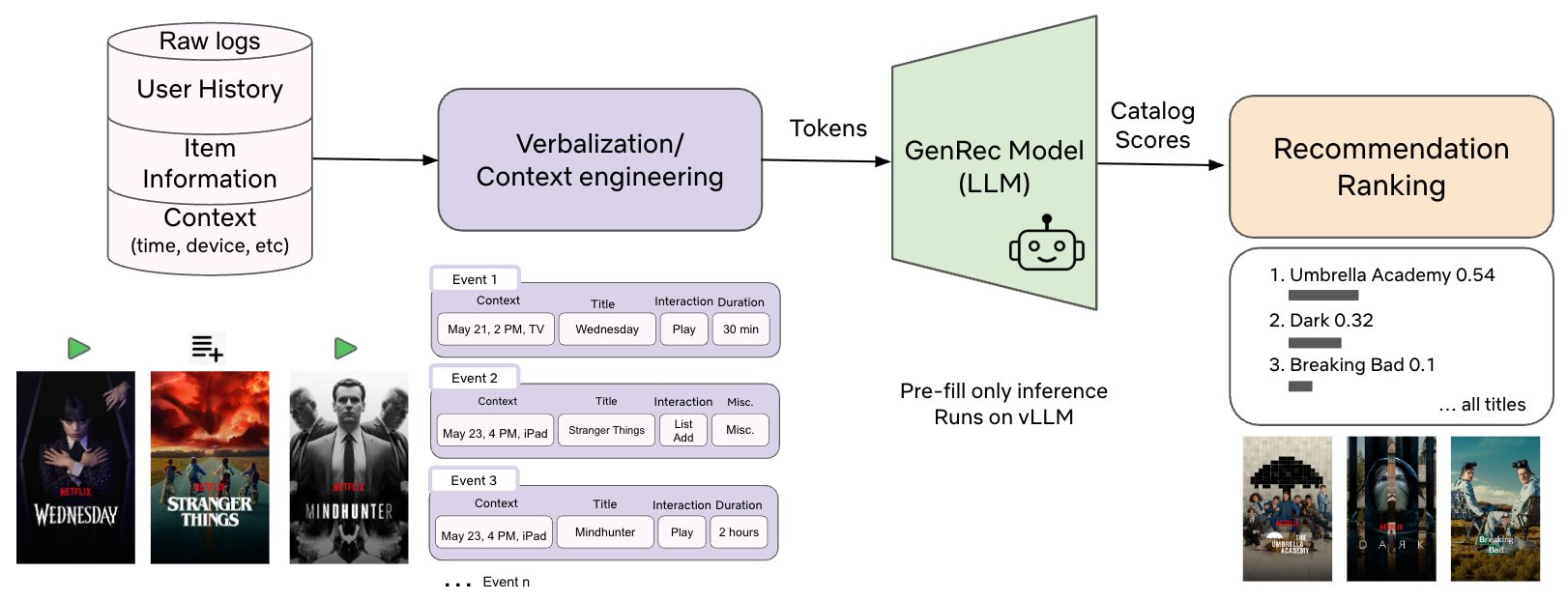
Watch history becomes plain text
Netflix 不将用户数据编码为稠密数值向量,而是将其转换为纯文本。播放、观看时长、点赞或点踩、加入列表和放弃观看等行为成为用户与推荐系统之间的一种对话。模型自行捕捉类型偏好或兴趣迁移等模式,而不是通过人工设计的特征来显式表达。
在第一阶段,Netflix 将一个开源模型适配到自己的数据。第二阶段则专门为其进行排序微调。| 图片来源:Netflix
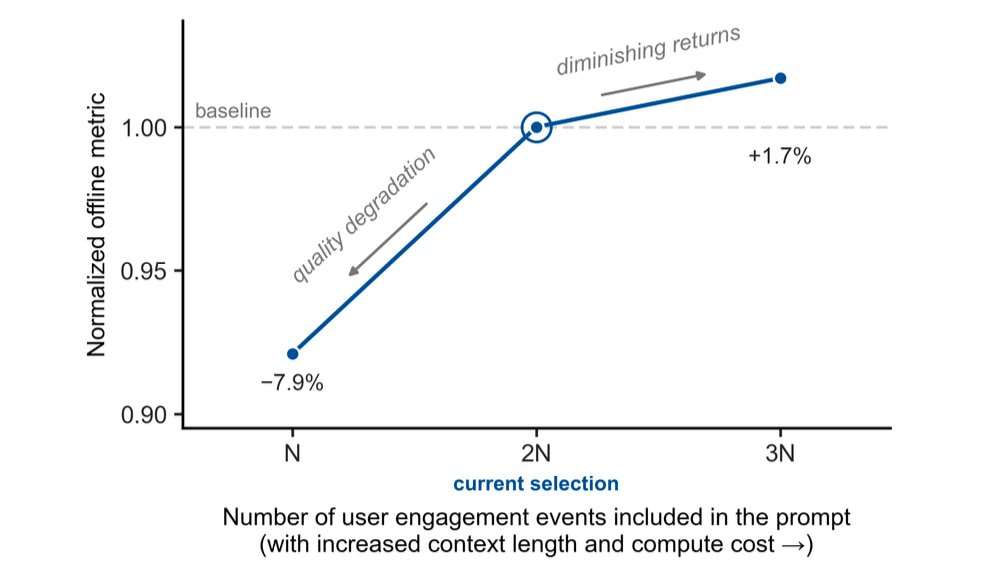
A full text version of every interaction would blow past the model's context window, so Netflix filters aggressively. High-signal events like long watch sessions stay in full detail, while brief taps or quick scrolls get dropped and binge sessions get condensed. To keep the model from suggesting titles that don't actually exist, Netflix adds a separate component that only scores real catalog entries.
Beyond the currently chosen context length, each extra event in the prompt barely improves ranking quality but adds compute cost. | Image: Netflix
GenRec runs on vLLM in a mode where the model reads the input once and scores all candidates in a single pass without generating any text. That keeps costs manageable.
Small gains, but statistically solid
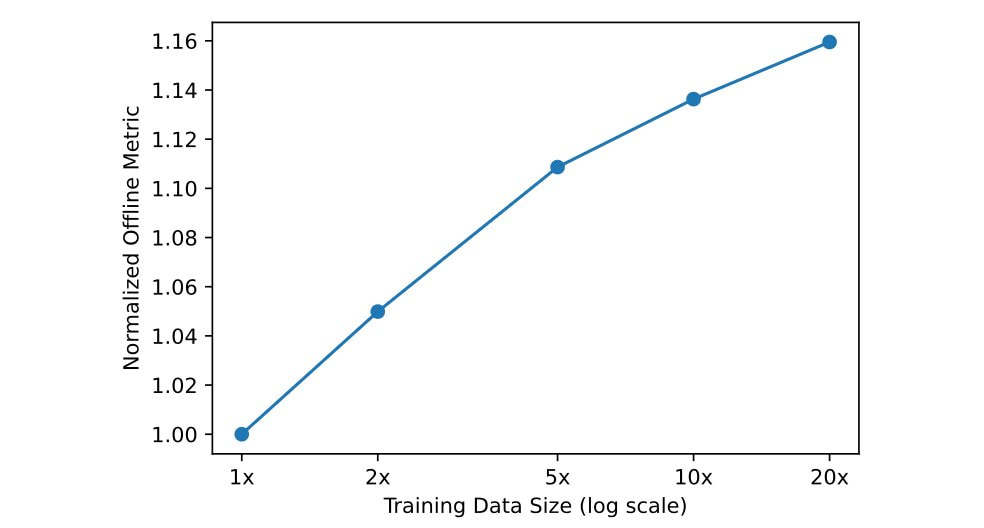
与这个经过多年调优的生产系统相比,GenRec 在离线测试中的排序质量提升了约 1.6%。而它达到这一效果所需的第二阶段标注样本数量大约只有后者的四十分之一。该对比仅针对这一特定阶段,不涉及全部训练数据。
更多第二阶段训练数据能提升这个约百亿参数模型的排序质量,但收益随数据量增加而递减。| 图片来源:Netflix
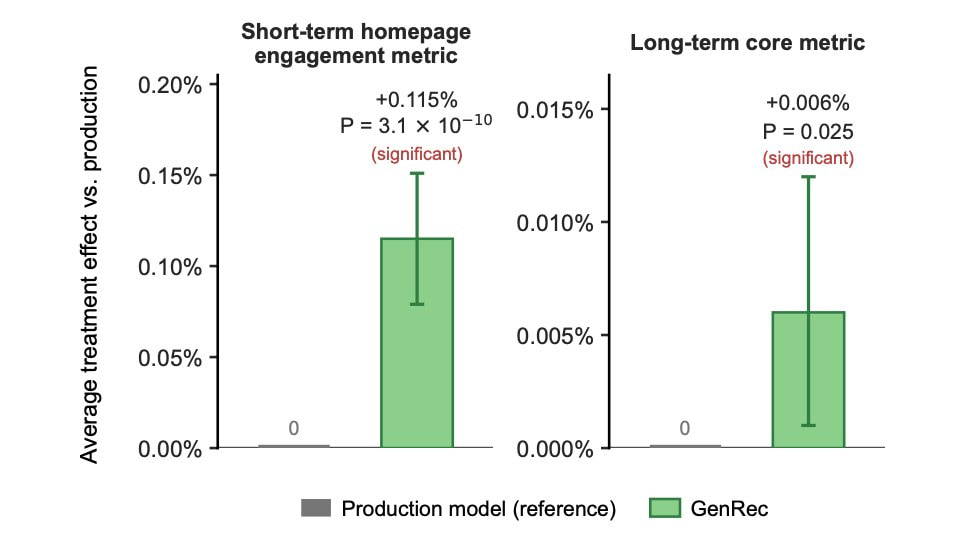
For the online test, Netflix ran a four-week A/B experiment on about ten percent of its traffic, limited to recommendation surfaces that get pre-computed. A short-term metric tracking user behavior on the home screen rose by 0.115 percent, and a long-term core metric improved by 0.006 percent. Both gains are too large to be explained by chance, according to Netflix.
在约百分之十流量的 A/B 测试中,GenRec 在两项指标上都超越了生产排序模型。| 图片来源:Netflix
The recommendation-specific fine-tuning in Phase 2 adds another 35 to 50 percent on top of the base model's performance. When the base model is already two weeks old, that gap widens to about 80 percent, because the base model no longer reflects new titles and changed preferences. Recommendation models go stale fast.
Context engineering replaces feature engineering
Netflix 将 GenRec视为更广泛趋势的一部分,这种趋势也出现在 PLUM、GLIDE 和 OneRec-Think 等工作中。不再为每个推荐任务构建定制架构,而是用单一语言模型处理多个用例。工作重心从构建越来越多的特征转向决定哪些信号进入模型输入、以及包含多少这些信号。基础设施也正向 GPU 服务器和 LLM 工具链迁移。
Netflix 团队称 GenRec 是"一个早期但有前景的步骤",并将该系统描述为传统推荐模型的强力替代方案。全面替换现有系统尚未提上日程。
Netflix 多年来一直将机器学习用于推荐列表以外的场景。早在 2020 年,该公司就描述了知识图谱和相似度图如何预测计划中的内容属于哪个类别、以及在每个国家可能触达多少观众。当时 Google 的 BERT 语言模型仅处理人工撰写的标题摘要,并将机器可读的表示输入下游模型。Netflix 也已开始为自己的生产工作流构建模型,有时还会公开发布,比如用于从视频中移除物体的 VOID 框架。
AI News Without the Hype – Curated by Humans
Subscribe to THE DECODER for ad-free reading, a weekly AI newsletter, our exclusive "AI Radar" frontier report six times a year, full archive access, and access to our comment section.